
53rd Plenary Session of the Committee on World Food Security (CFS53): Governing Sustainable, Climate Resilient & Equitable Urban and Peri-urban Food Systems Transformations
Ciara Varley, Anna Lorente Sebastián, Peter C. McKeown, Charles Spillane, Carlos Rodriguez Plaza, Dawit Alemayehu Chekol, Shamilah Nassozi, Yared Mesfin Tessema.
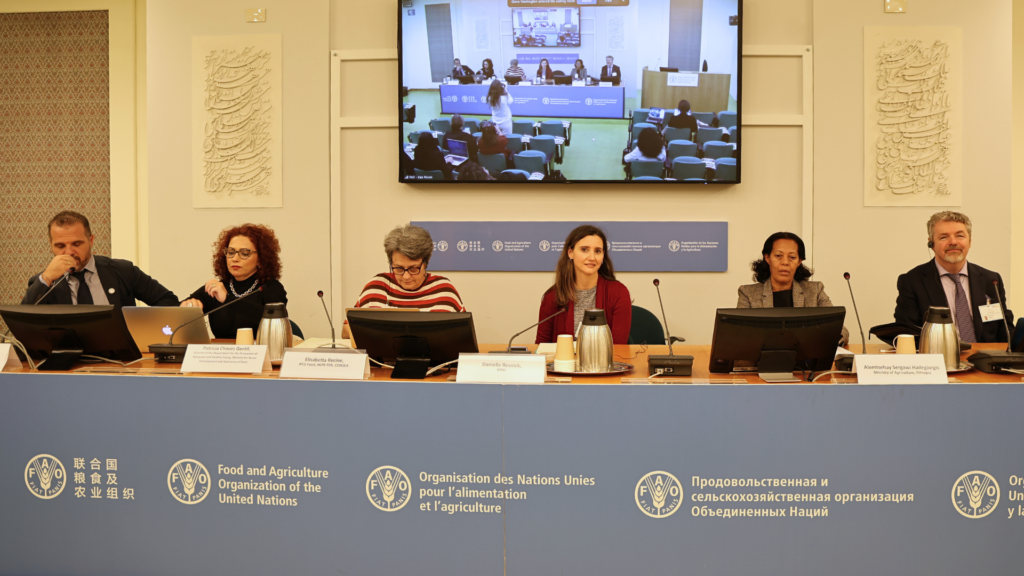
The 53rd Plenary Session of the Committee on World Food Security (CFS53) took place last October at the FAO Headquarters in Rome, Italy. EcoFoodSystems co-led the side event, ‘Governing Sustainable, Climate Resilient & Equitable Urban and Peri-urban Food Systems Transformations: Field Insights and Policy Innovations’.
The UN has reported that nearly half of humanity live in a city. Already a critical shaper of global food systems, cities and urban areas will continue to grow in importance as critical drivers of food system transformation.
With this context, the EcoFoodSystems research and innovation project brought a city-focused perspective to the 53rd Plenary Session of the Committee on World Food Security (CFS53) at FAO’s headquarters in Rome last October.
The Committee on World Food Security is a multistakeholder group that coordinates international food security. The committee hold an annual Plenary to allow food system stakeholders from around the world to debate, discuss and decide on food system policy at a global level. EcoFoodSystems attended the event to listen to, and share, the latest food systems research and innovations from across the globe.
Side Event: Governing Sustainable, Climate Resilient & Equitable Urban Food Systems Transformations
The University of Galway team of the EcoFoodSystems project worked with FAO, BMLEH, IFAD, EU, IFPRI, University of Cape Town, the Government of Brazil, and CONSEA to run the side event: “Governing Sustainable, Climate Resilient & Equitable Urban and Peri-urban Food Systems Transformations: Field Insights and Policy Innovations”. The session, which was framed by recent High-Level Panel of Expert (HLPE) reports from FAO, focused on the need to strengthen vertical integration between national and local policy processes to build resilience. The session discussed the role that formal and informal institutions can play in structuring participation, decision-making and accountability for improved food systems.
The event was opened by Guido Santini, Global Programme Coordinator at FAO. Dr. Santini opened the day’s conversation by highlighting the key role of city regions in food system transitions, noting that cities are at the “frontline of addressing climate, equity, and nutrition issues”. Santini also stressed that collaboration between government, civil society, academia and the private sector is crucial to achieving food system transformations.
The conversation then moved to a discussion of the 19th and 20th editions of the High-Level Panel of Experts on Food Security and Nutrition Reports from authors of the report, Dr. Elisabetta Recine and Dr. Danielle Resnick.
Findings from the High-Level Panel of Experts on Food Security and Nutrition
Key member of the panel, Dr. Elisabetta Recine, President of the Brazil National Food and Nutrition Security Council (CONSEA), presented some of the report’s key findings and guidance. With 70% of the world’s food consumers and three-quarters of food-insecure people living in cities, changes to urban food systems can have major impacts on food security globally, she said.
But cities face diverse challenges: Unemployment, lack of infrastructure, inequality, vulnerability, conflict, and environmental hazards remain major barriers to food system transformation. When considering solutions, Dr. Recine highlighted HLPE20’s five guiding principles – Rights-based framework; Integrity of nature; Equity; Care and PANTHER (participation, accountability, non-discrimination, transparency, human dignity, empowerment, and rule of law) – as a framework for developing effective food system policies and programmes.
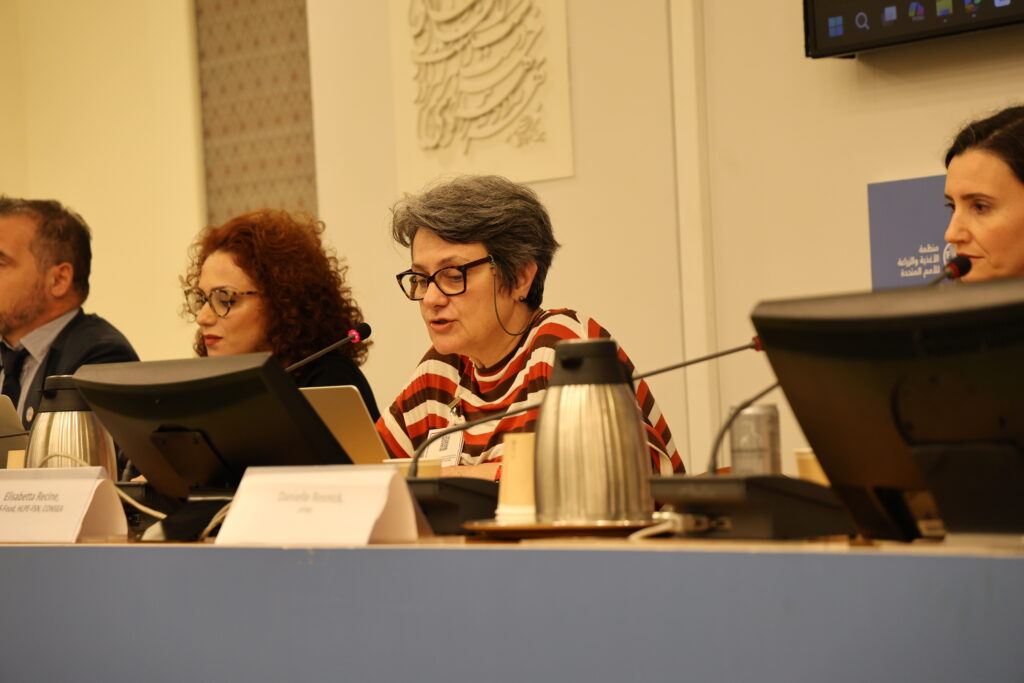
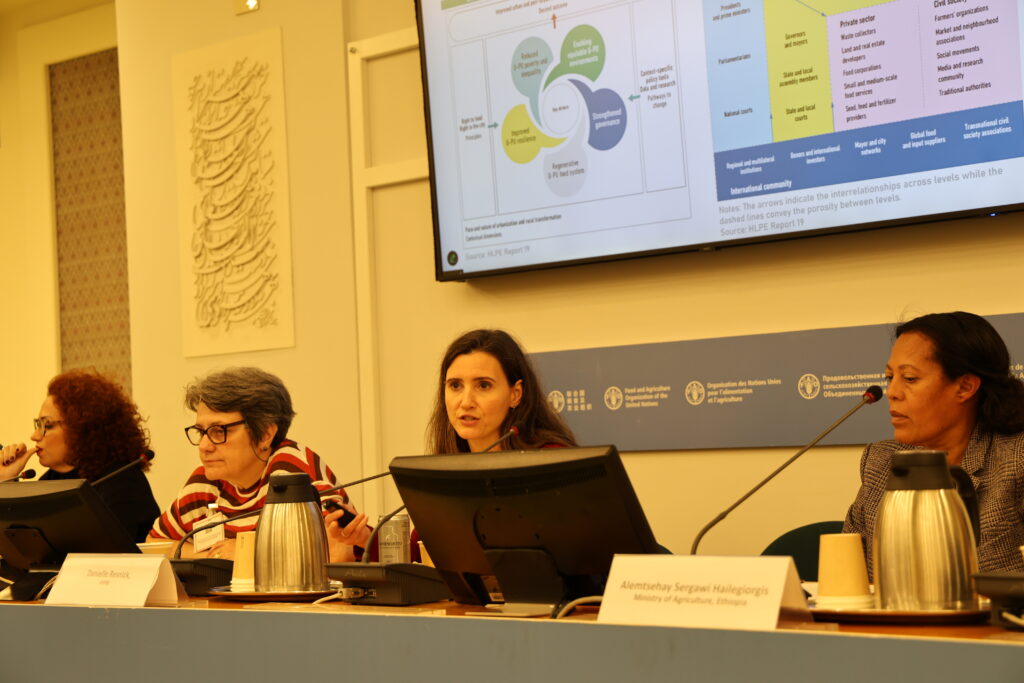
Dr. Danielle Resnick, IFPRI Senior Research Fellow, added further detail on the role governance plays in urban and peri-urban food systems. Dr. Resnick highlighted three major challenges to current food system governance: coordination, implementation, and contention.
Coordination of different food system actors across different types of urban areas poses one challenge, she said. Larger cities, for example, will require lots of cross-municipal coordination, while conflict-affected cities will deal with more complex food system issues. Implementation poses another challenge. Different cities may have different finances and resources available for the provision of services and investments within an urban environment. Considering contention, Dr. Resnick highlighted how divergent policy views are another limitation to food system transformation. Taking discourse surrounding informal food markets as an example, Dr. Resnick highlighted that while some stakeholders may consider informal markets as a critical source of food security for lower-income city residents, others may criticise informal markets as sites of food safety hazards.
Food System Findings from Addis Ababa, Barcelona and Brazil
With no shortage of challenges and opportunities for the world’s urban food systems, the discussion moved to findings from food system policies and programmes being implemented in Brazil, Ethiopia and Spain.
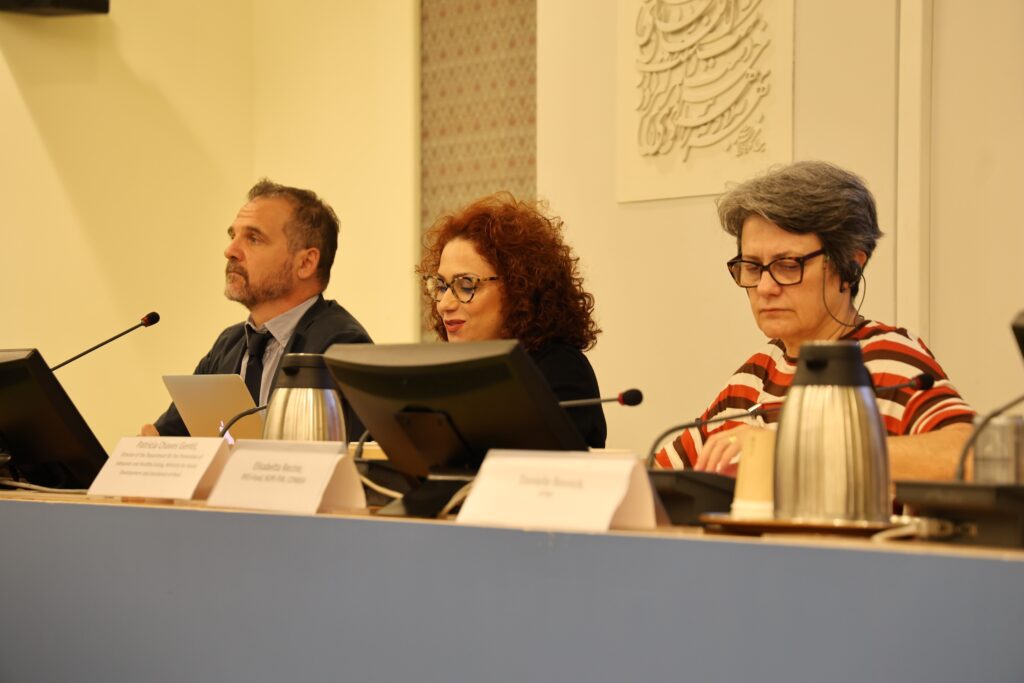
Ms. Patricia Chavez Gentil, Director for the Department of the Promotion of Adequate and Healthy Eating in Brazil’s Ministry of Development and Social Assistance, demonstrated how strategy can make a real impact for food systems, using findings from the ‘Alimenta Cidades’ programme as an exemplar. The programme encompasses 102 cities across the country, serving a population of 76.6 million residents. Comprising a comprehensive set of tools – including assessments of food systems, financing efforts, mentorship, training, and peer-to-peer collaboration among cities – the initiative works to enhance the availability and affordability of healthy foods in the city. Solidarity kitchens, an urban and peri-urban agriculture programme, and a family-farmer focused food acquisition programme provide examples of effective strategies that have emerged from the programme.
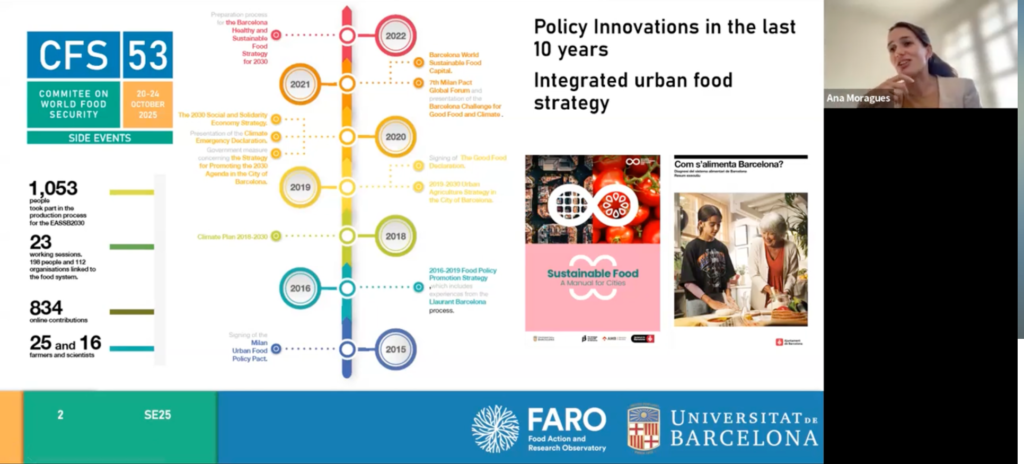
Dr. Ana Moragues Faus Director of the Food Action and Research Observatory from (FARO) at the University of Barcelona showed the benefits of multilevel governance in practice. Her analysis of Barcelona’s journey toward food system transformation highlighted how multilevel governance structures are solving some of the city’s systemic challenges, which range from food insecurity to intense touristification and climate pressures. These pressures have accelerated food system transformation, pushing strategy from narrow initiatives to a city-wide, Integrated Urban Food Strategy. A key strength of the strategy, Dr. Moragues Faro says, lies in its multi-level governance architecture, which includes a city-level Food Policy Council and a Joint Office with the regional government for Sustainable Food. Together, these structures increase coordination between different actors, which is essential to addressing the spatial and jurisdictional complexity of Barcelona.
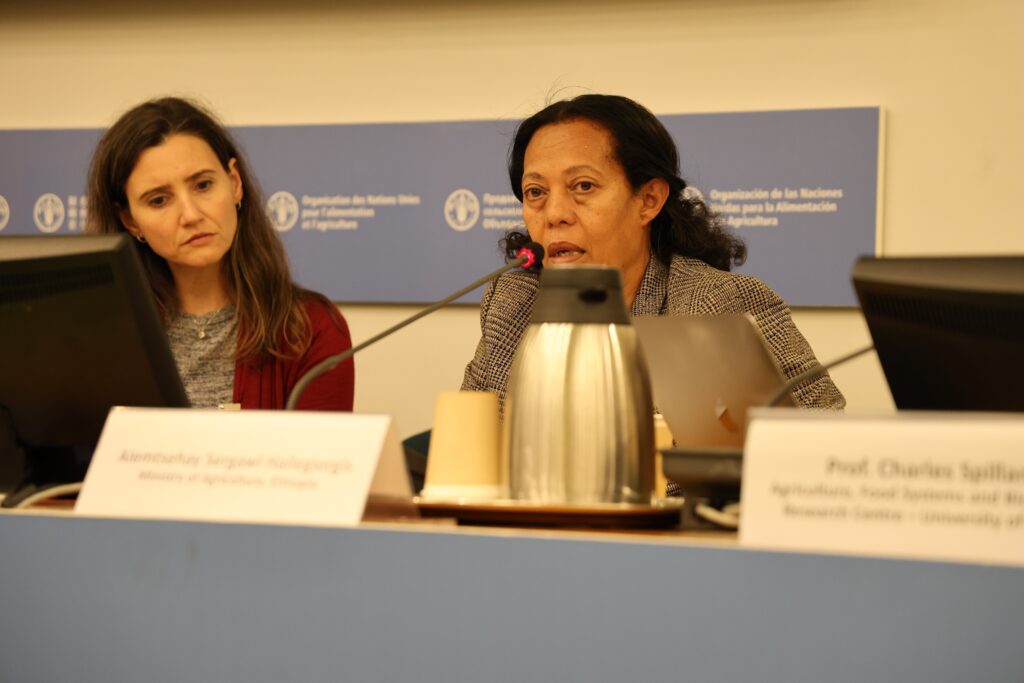
Ms. Alemtsehay Sergawi Hailegiogis, Head of the Food and Nutrition Office at the Ethiopian Ministry of Agriculture, shared her perspective on the role of policy in driving change within urban food systems. Ms. Alemtsehay drew on findings from the recent workshop organized by EcoFoodSystems, ‘Policy, institutional & governance innovations for sustainable, healthy and affordable diets in Ethiopia’s city regions’, which identified the policies considered most effective by food system stakeholders working in Addis Ababa. Initiatives such as the Food-Based Dietary Guidelines (FBDGs), the Nutrition-Sensitive Agri-Food System Strategy, and the National School Feeding Programme emerged as the most impactful in the region.
In her discussion of the findings, Ms. Alemtsehay highlighted the importance of integrating different sectors and areas of expertise to enable food systems transformation. She discussed how nutrition knowledge must be integrated into agricultural policies to promote the production and availability of nutrient-dense foods. Similarly, Ms. Alemtsehay highlighted the essential role of behaviour change communication in encouraging people and communities to adopt diversified and nutritious diets. She also highlighted how local knowledge must be placed at the centre of policy ensure effective implementation occurs at the grassroots level.
She concluded that, integrating knowledge and expertise from different actors across the country into the national policy strategy is what is helping to drive progress toward food system transformation in Addis Ababa and beyond.
Prof. Charles Spillane, Principal Investigator on the EcoFoodSystems programme and moderator of the day’s event, closed the day’s discussion by reinforcing that urban and peri-urban areas must evolve together. Prof. Spillane highlighted that partnerships between local and national governments will be one of the drivers needed to transform city-region food systems.
For those interested in seeing more sustainable and equitable food systems within urban and peri-urban areas, the day’s discussion offers insights into best practice for more effective governance within the system. You can view the recording of the event on the Committee on World Food Security YouTube Channel:
The EcoFoodSystems project extends thanks to the International Fund for Agricultural Development (IFAD), who fund the EcoFoodSystems project via the EU DeSIRA initiative, for their support in facilitating this event.