
Agroecology across the Asia-Pacific: EcoFoodSystems at TARASA25
Ky Hoang, Ciara Varley, Charles Spillane, Peter C. McKeown
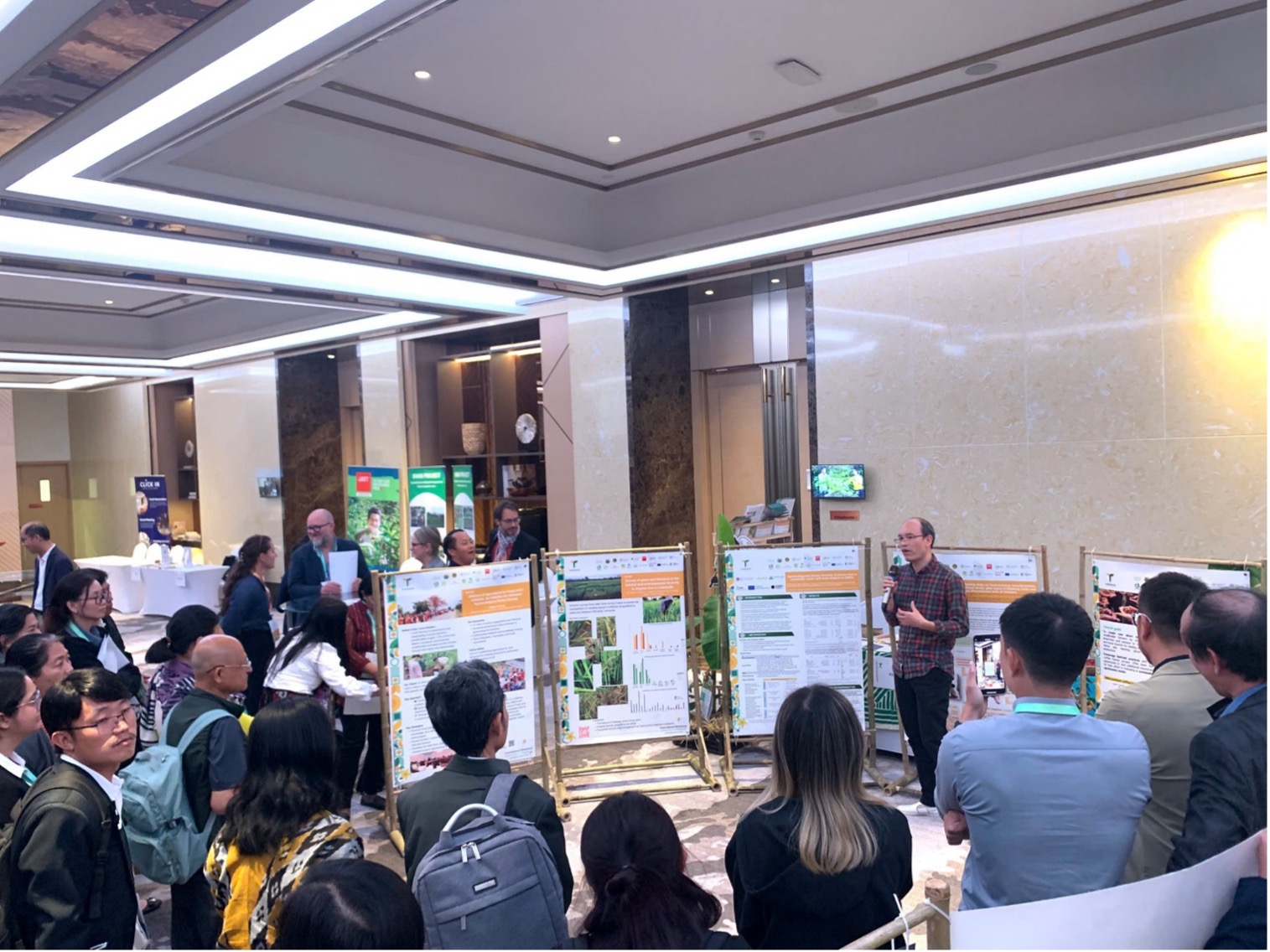
EcoFoodSystems joined other food system stakeholders at the international workshop TARASA25: “Transitioning Towards Agroecology and Regenerative Agriculture: A Contribution to Food Systems Transformation”
What role can agroecology play in enabling safer, more sustainable food and agricultural systems in Southeast Asia?
EcoFoodSystems researcher Ky Hoang joined others in Vientiane, Lao PDR between November 24th and 27th 2025 to address this question at the international workshop TARASA25: “Transitioning Towards Agroecology and Regenerative Agriculture: A Contribution to Food Systems Transformation”.
The workshop brought together an international cohort of 245 stakeholders representing 20+ countries from across policy, research, agriculture, youth leadership, civil society and the private sector. The event was organized by the LICA (Lao Facilitated-Initiative on Agroecology for ASEAN), with support from the Lao Ministry of Agriculture and Environment. Financial support was provided by Agence Française de Développement, the European Union, and French Facility for Global Environment.
Nine out of ten research studies indicate that agroecology can improve dietary diversity
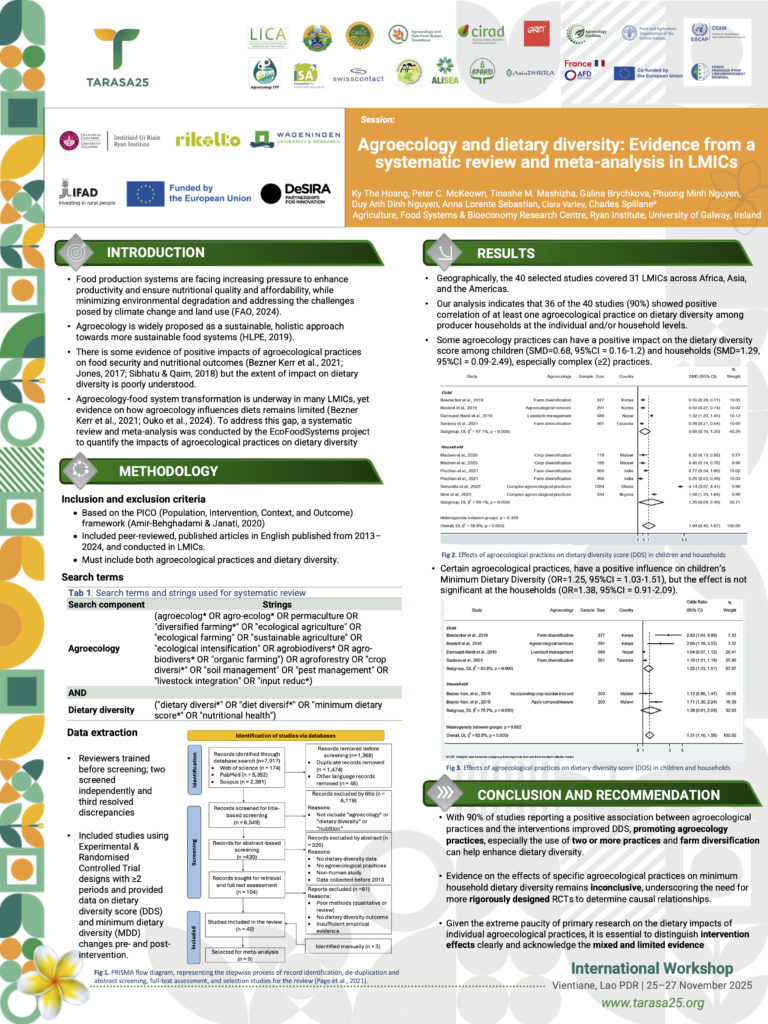
During the event’s presentation session, Ky shared EcoFoodSystems’ latest findings from an ongoing systematic review: “Agroecology and dietary diversity: Evidence from a systematic review and meta-analysis in low- and middle-income countries”.
The rapid-fire presentation gave a snapshot from a systematic review being completed by the EcoFoodSystems research team.
Of 40 selected studies across 31 LMICs in Africa, Asia, and the Americas, 90% indicate a positive association between agroecological practices and improved dietary diversity. Benefits are seen most often when two or more practices are used, indicating that combining multiple agroecological practices, together with supportive services such as social safety nets, shows strong potential to improve diets in urban and peri-urban food systems.
The findings contribute to a growing body of research that suggests that agroecological farming practices can have positive impacts on nutrition.
Our food future: Next steps for agroecology
As pressure on food systems continues to mount across the Asia-Pacific due to climate change, biodiversity loss and ever-changing consumer demands, agroecology is emerging as a framework to enable more sustainable and equitable outcomes from our food and farming systems.
For Ky and others in attendance across the three days, a key takeaway from the conference was the need to bring agroecological principles out of policy documents and into real evidence on the ground. As we head into 2026, the EcoFoodSystems team look forward to enabling this implementation through our stakeholder-driven research and innovation activities.
Read more about TARASA25 on the official TARASA25 website at the link: https://tarasa25.org/