
Serious Games in Ethiopia: EcoFoodSystems Develops Game Toolkit for Addis Ababa’s Adolescents
September 2025 – March 2026, Addis Ababa, Ethiopia.
Annabel Nillesen, Ciara Varley, Mestawet Gebru Gebremeskel, Dawit Alemayehu Chekol, Elise Talsma
EcoFoodSystems, in partnership with the Ethiopian Public Health Institute (EPHI), the Alliance of Biodiversity International and the International Center for Tropical Agriculture (CIAT), and Efuye Gela have been co-developing a serious game about Ethiopia’s food-based dietary guidelines with adolescents studying in secondary schools in Addis Ababa.
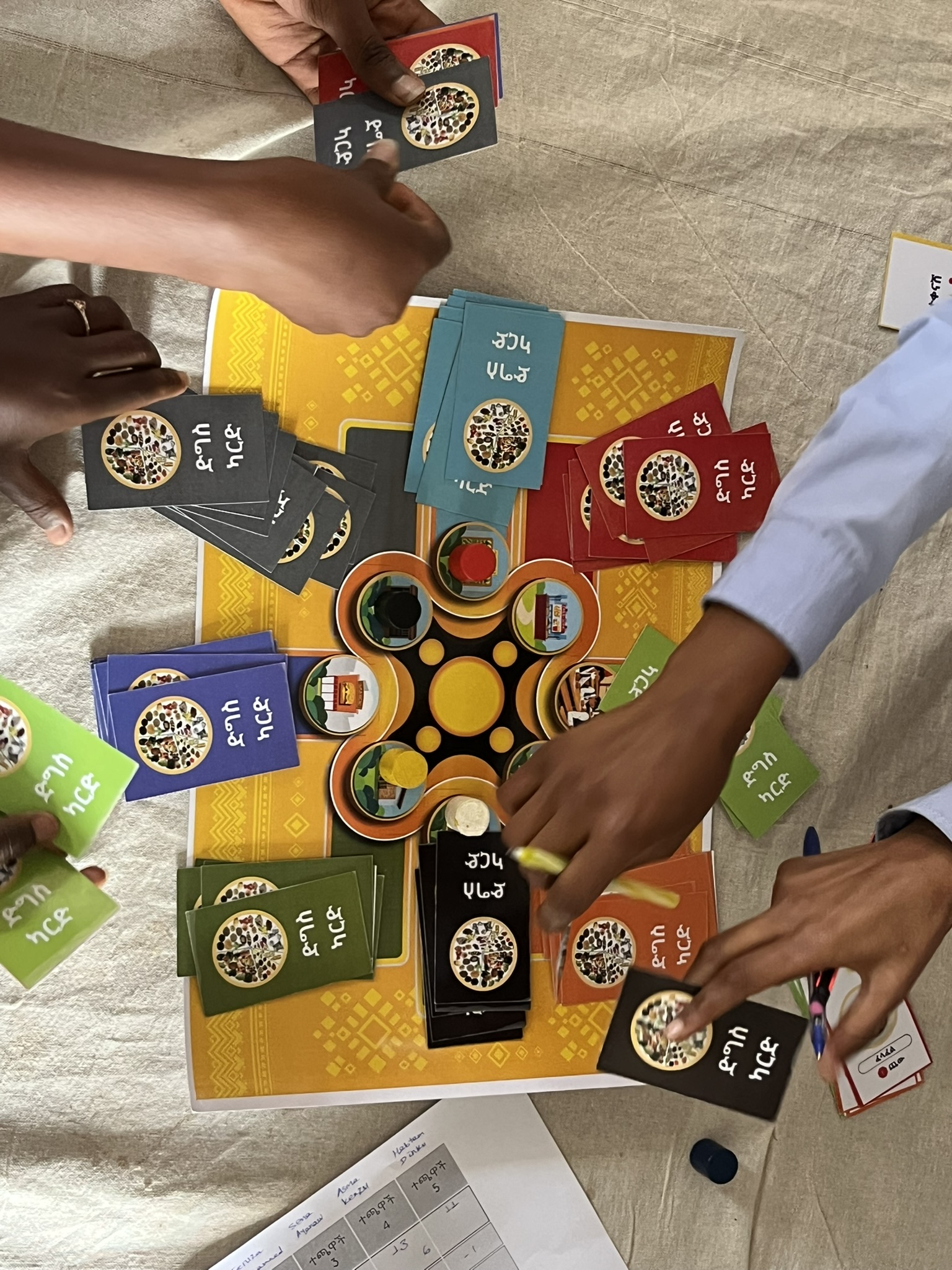
Playing with your food might be a “no-no”, but playing games about food could support serious wins for food systems.
For the past few months, Wageningen University and Research (WUR) and University of Galway researchers from the EcoFoodSystems project, in collaboration with CIAT, EPHI and game developing company Efuye Gela, have worked with adolescents living in Addis Ababa to co-create a serious educational game toolkit based on the Ethiopian food-based dietary guidelines. The created games provide information about healthy diets in a fun way, supporting the dissemination of key messages from the food-based dietary guidelines developed by EPHI, Ethiopian Ministry of Health, Ethiopian Ministry of Agriculture and Ethiopian Ministry of Education.
Creating educational tools based on Ethiopia’s food-based dietary guidelines
Ethiopia has comprehensive food-based dietary guidelines. These guidelines provide dietary recommendations for people living in Ethiopia, with the aim to tackle malnutrition and improve the national food systems.
Given the positive impacts the food-based dietary guidelines can have on nutrition and health outcomes, national school feeding guidelines in Ethiopia have been aligned to the food-based dietary guidelines. But sharing useful insights from the guidelines can still remain challenging – especially among adolescents who can often be overlooked in food system transformation efforts.
Nationwide nutrition education programmes have been identified as one way to further engage adolescents with the food-based dietary guidelines. With this as context, researchers from WUR and University of Galway’s EcoFoodSystems teams, in partnership with the EPHI, the Alliance of Biodiversity International and CIAT and game experts from Efuye Gela, decided to collaborate with secondary school students from Addis Adaba to create a serious game toolkit about the Ethiopian food-based dietary guidelines.
By working with adolescents and game developers, the researchers aim to translate the food-based dietary guidelines into relatable, fun and culturally relevant games that can promote awareness and behaviour change of healthy dietary practices among adolescents. In the long-term, the games are intended for use by the Ministry of Education, Addis Ababa City Education Bureau, the Ministry of Health, and EPHI to support integration of the food-based dietary guidelines into the national education curriculum.

Games can be more than just entertaining – they can also be educational!
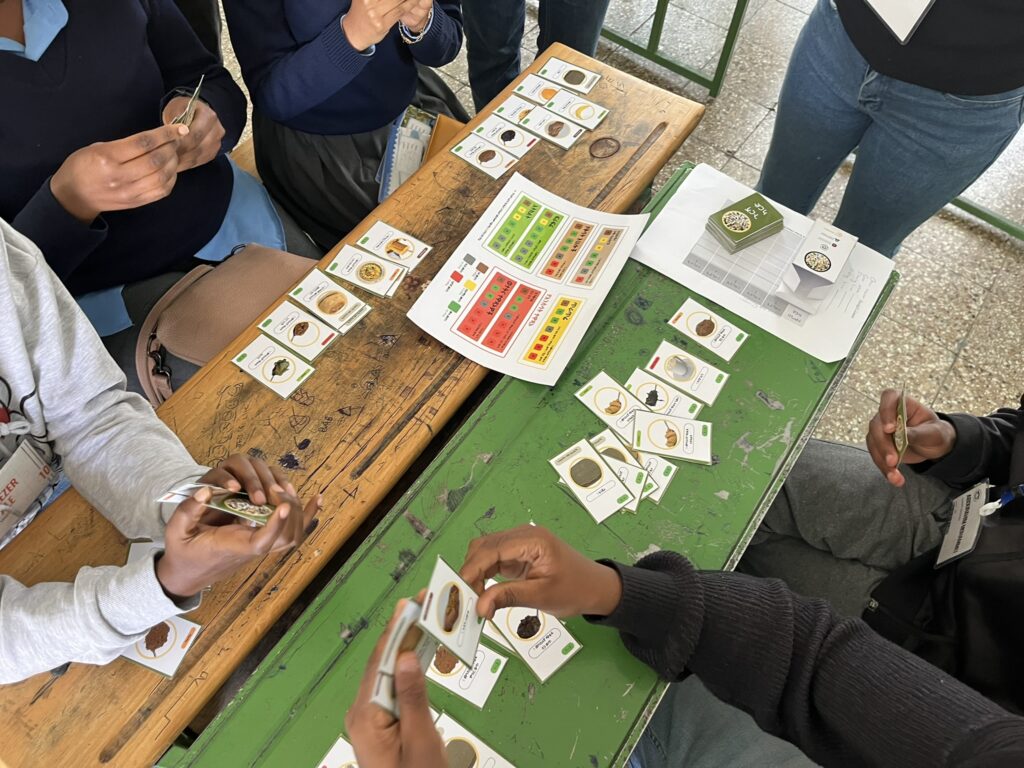

Students from a public secondary school in Addis Ababa were involved from the beginning of the game’s iterative development and refinement, providing their input and feedback on the game’s design. The co-creation of the game toolkit was guided by Player-Centred Design and Design Thinking methodologies. These frameworks focus on iteratively creating solutions that align with the needs of the game’s focus audience. To facilitate a player-centred design and design thinking method of game generation, co-creation workshops were conducted with adolescents from a government secondary school in Addis Ababa, Ethiopia in September 2025.
The workshops, facilitated by game development company Efuye Gela, had adolescents:
- Play and rank existing games,
- Draw and list their usual and aspirational diets,
- Learn about the food-based dietary guidelines and game design, and
- Come up with different creative serious game concepts, create prototypes and playtest them with their peers.
Game concepts and prototypes were created by the game developers based on key messages of the food-based dietary guidelines and using insights gained in workshops about adolescent’s own game preferences and ideas.
After multiple rounds of prototype testing and improvement with adolescents, researchers, and game developers, a final toolkit of three serious games was created: two card games (Beyeynetu, Gursha) and one board game (Deges). Each game focuses on different key messages of the food-based dietary guidelines, including topics such as different food groups, dietary diversity, recommended numbers of servings per food group, sugar and salt intake limits, recommended water consumption, physical activity, and food safety. Challenges used in the games to teach these concepts included matching foods to food groups, collecting the recommended number of servings of each food group, and making healthy decisions in the urban food environment.
By combining knowledge from both game design and nutrition alongside adolescent’s own expertise, the transdisciplinary team created well-designed games with scientifically-sound content. The games succeeded in incorporating the adolescents’ game preferences, such as elements of tension, speed, competition, surprises, physically engaging gameplay, and simple rules. Cultural elements such as giving gursha (feeding someone a mouthful of food as a sign of love and care), and context-specific elements such as the urban food environment were also included in the games. Together, these created an experience that was educational, challenging, culturally relevant, and fun!
Next steps for EcoFoodSystems’ serious games
An evaluation of the final games with the workshop participants showed high satisfaction in terms of enjoyment.
“I learned that games can be more than just entertaining – they can also be educational.”
Boy, Age 17, Grade 11
The games developers found that involving adolescents in the co-creation process was not only valuable for the development of the serious games, but that participation was also meaningful for the game’s adolescent co-creators. Participants shared how they learned more about healthy diets and game development, made new friends, developed communication and collaboration skills, developed confidence, and discovered their own capacity to create.
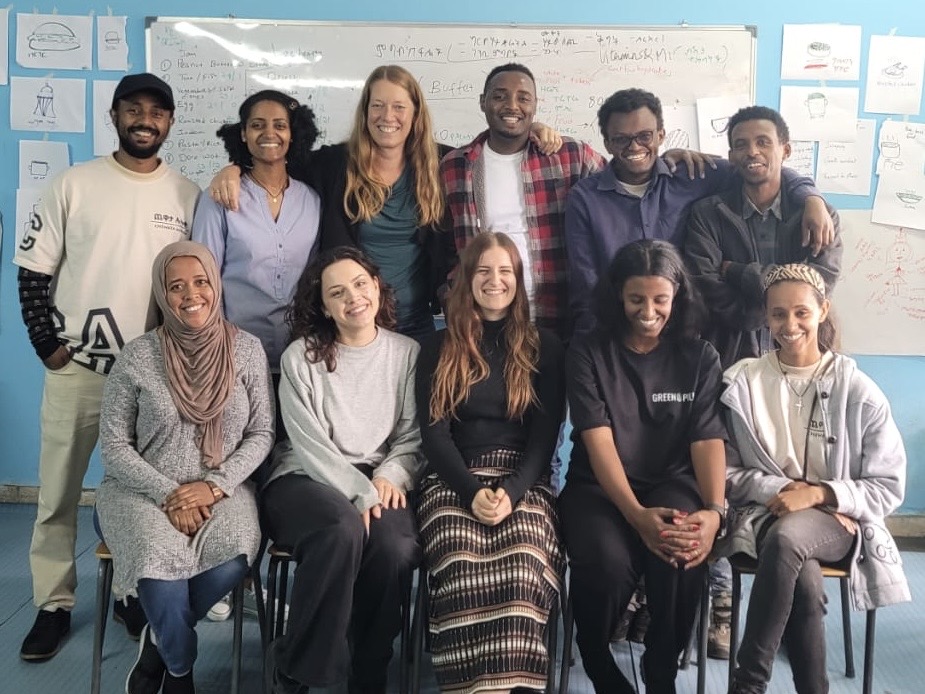
The game toolkit is now being used in a randomised control trial in six Addis Ababa secondary schools. These trials will help researchers understand the effect three months of weekly gameplay has on adolescents’ knowledge awareness and behaviour related to healthy diets – the findings of which will be disseminated in the coming year.
The EcoFoodSystems project extends thanks to the EU DeSIRA initiative for funding and the International Fund for Agricultural Development (IFAD) for management support.
To learn more about the games, keep in touch with EcoFoodSystems through our website or LinkedIn.