
Smart Farming for Urban Food Systems: Scaling integrated solutions for circular, efficient and resilient urban agrifood systems
Ciara Varley, Anna Lorente Sebastián, Peter C. McKeown.
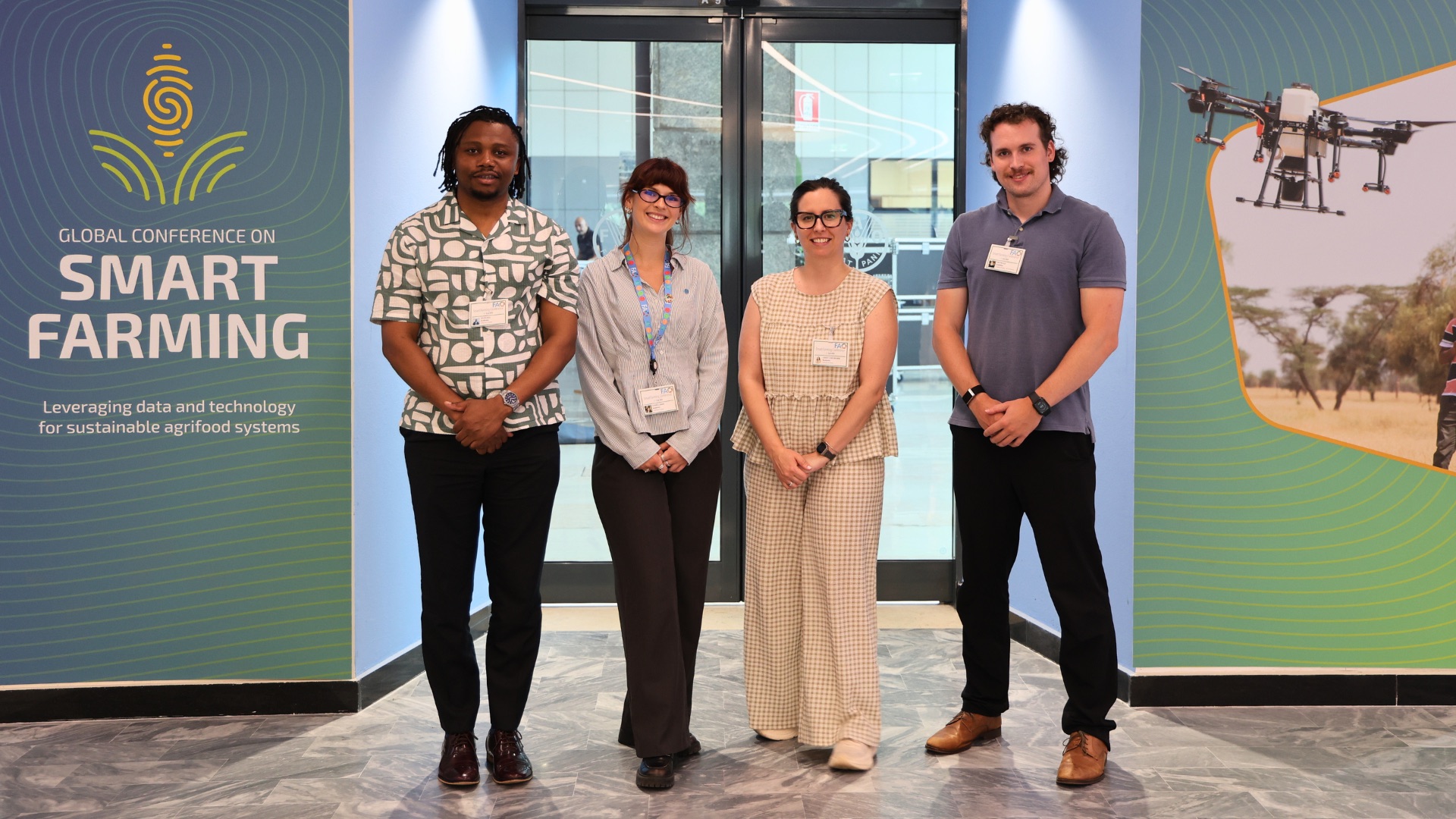
02nd July 2026 – EcoFoodSystems shares the EcoFoodSystems City-Regional Food Systems Decision-Support Dashboard at the FAO Global Smart Farming conference in Rome, Italy.
Smart farming: the next agricultural revolution or a new digital divide?
Smart farming – an approach to farming that uses advanced technologies like AI, drones and satellite sensors to improve farming and food system processes and outputs – promises to close the worldwide hunger gap, feeding 2050’s predicted 10 billion people with fewer resources than we use today. A lofty promise certainly but thinking of the possibilities, the boundaries of our furthest satellites could quite literally be the limit.
In a smart farming world, a farmer can monitor her greenhouse from an app on her phone, while someone else grows the latest variety of drought-resistant crops in a previously barren field. Satellites monitor crops from space, machine learning models track plant health in real-time, and ‘robot’ dogs protect valuable crops from predators.
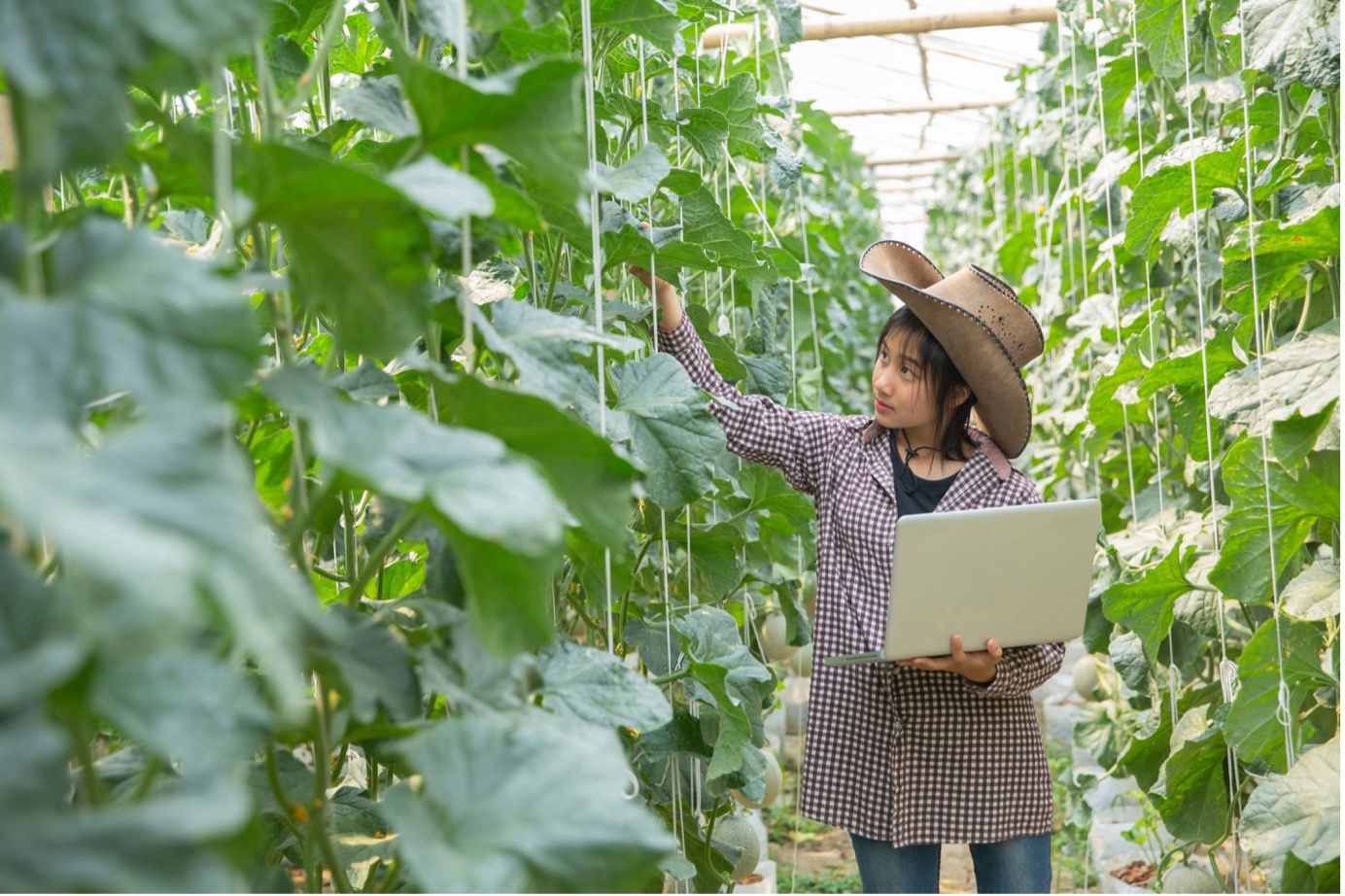
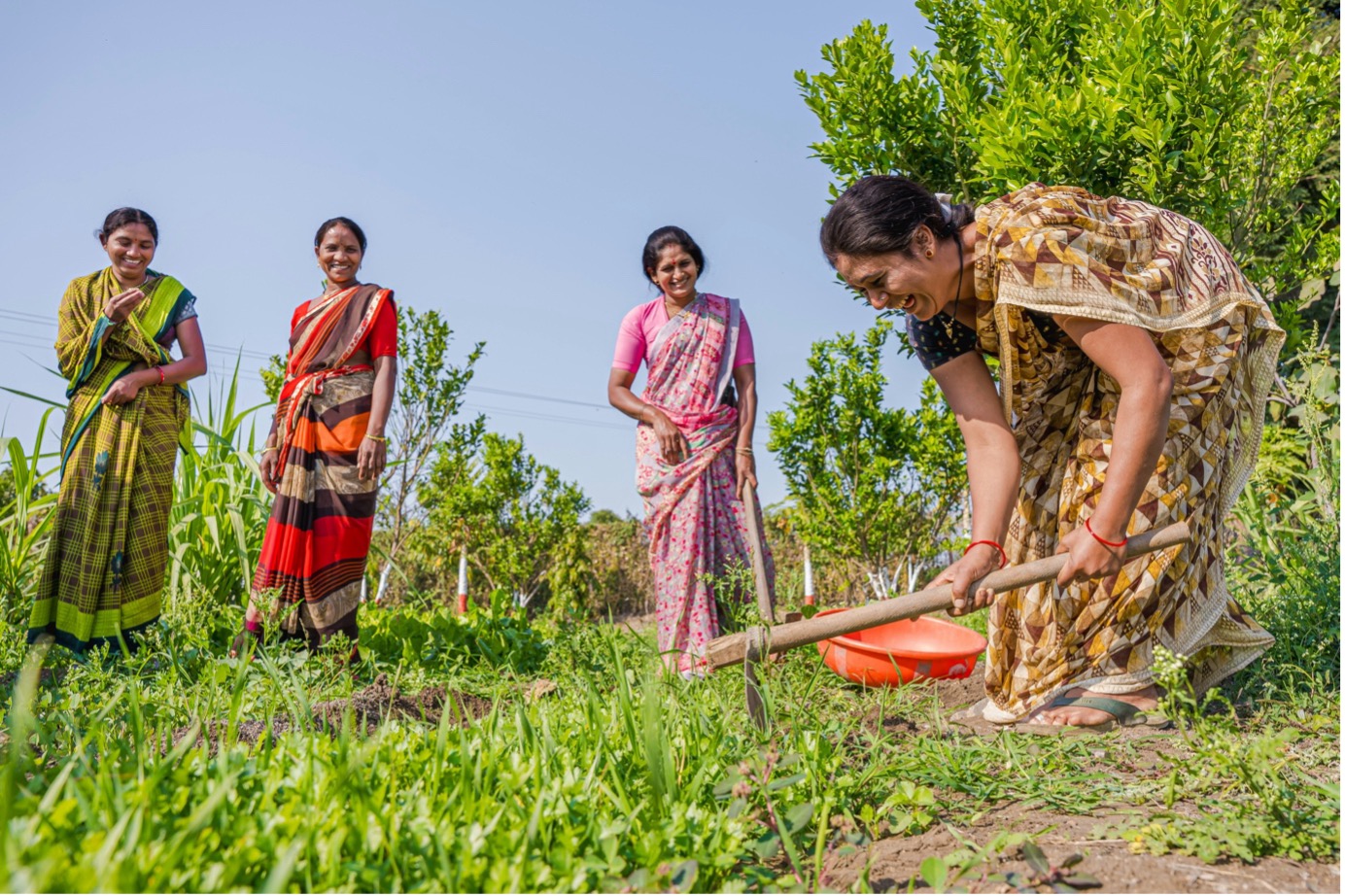
But as the world moves toward new and novel farming systems, there is a risk that those most in need will be left behind. Existing inequalities within farming could be worsened as a yet unsolved digital divide further marginalises smallholder farmers in low- and middle-income countries. Another risk sees the development of useless (or even harmful) tools that fail to meet the needs of farmers: apps that sit untouched, AI-enabled advice that negatively impacts yields, or new threats to farmers in the form of ransomware.
Smart farming for urban food systems: a new event from FAO
With options for progress, failures and serious risks facing us, what are the next best steps for ‘smart farming’?
The Food and Agricultural Organisation of the United Nations (FAO) convened organisations from across diverse fields such as development, farming, government, research and the private sector at the FAO Global Smart Farming conference in Rome to consider this question, asking:
| How can smart farming tools create real impact for farmers?
EcoFoodSystems joined the entourage of international organisations, bringing a city-focused and decision maker-centred perspective to the event. While EcoFoodSystems’ stakeholder-focused research is diverse – spanning research on green skills to serious games about nutrition – the star of the show this time was the EcoFoodSystems City-Regional Food Systems Decision-Support Dashboard: a novel tool that uses national and local data to support city-regional food system actors to make evidence-backed decisions about local and national food systems. The tool is one of the first city-region focused food system dashboards being developed.
City-regional food system dashboards: from data to decisions at the speed of change
To ensure tools like the EcoFoodSystems City-Regional Food Systems Decision-Support Dashboard are of real benefit to food system actors, EcoFoodSystems has completed extensive consultations with stakeholders working at all levels in Addis Ababa and Hanoi’s food systems. Although these cities might appear to have little in common, the project has discovered that a shared problem unites them both: making evidence-based decisions is time-intensive and difficult. Identifying this problem has led to the project developing the dashboard as a key solution.

Following on from two rounds of dashboard-focused consultations with decisionmakers in Addis Ababa and Hanoi, EcoFoodSystems have been working to refine the current prototype of the dashboard; aggregating key data, developing food system indicators, and visualising these in one easy-to-use tool.
One of the researchers working on the project, Jemima O’ Farrell, shared the latest iteration of the dashboard at the FAO Smart Farming Conference side event: Scaling integrated solutions for circular, efficient and resilient urban agrifood systems.
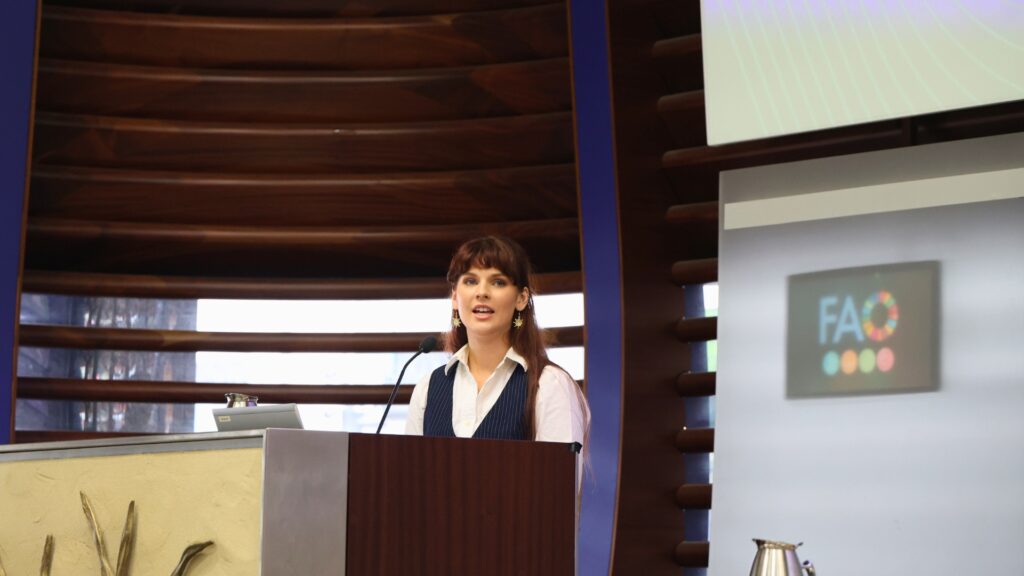
Framing her presentation was findings from EcoFoodSystems’ engagement with stakeholders. Our multistakeholder workshops and consultations have revealed that:
- Policymakers and stakeholders spend significant time searching for the right information across multiple platforms.
- Critical information on food accessibility, nutrition, poverty, markets, food environments, production, climate vulnerability and environmental impacts is rarely accessible in one place.
- This fragmentation slows evidence-based decision making and hinders cross-sectoral collaboration.
- Decision-support tools can help solve these problems by aggregating and visualising relevant information.
Despite their potential to solve these problems, a comprehensive city-level dashboard still does not exist. EcoFoodSystems is filling this gap by working directly with stakeholders in our focus cities. The outcome to date is a comprehensive dashboard visualising information related to food flows, food outlet mapping, multidimensional poverty, key stakeholder contacts, and more.
Attendees at the event got a first look at the dashboard. A handful of potential use cases the dashboard can offer were shown, including:
- Mapping rural-urban food flows: Pulling on EcoFoodSystems’ work on food flow mapping, the demonstration showed how the dashboard allows users to identify vulnerabilities in the supply chain for specific commodities.
- Climate-smart agri-resilience investment in Vietnam: Through aggregation of satellite remote sensing and climate reanalysis-derived indicators, users of the dashboard can assess historical datasets to better understand the impact of climate change on food production.
- Food outlet accessibility in Addis Ababa: In collaboration with OpenStreetMaps Ethiopia and through a citizen science approach, the dashboard allows users to map food deserts and food swamps – highlighting where the city enables healthy eating and where the city works against healthy eating choices.
The dashboard is continuing to improve through focused feedback provided by expert stakeholders at the EcoFoodSystems Dashboard Consultation meetings.
What do cities really need? Dr. Anbissa Muleta from ATI shares insights
Joining the EcoFoodSystems team was one of these experts: Dr. Anbissa Muleta, Ethiopian Food Systems Transformation and Nutrition National Cluster 2 Lead at the Ethiopian Agricultural Transformation Institute (ATI). ATI is a delivery-focused organisation within the Ethiopian government working to support Ethiopia’s agriculture sector. Dr. Muleta is the national cluster lead at the organisation and joined the event to share his perspective on the role dashboards can play in food system decision-making at the governmental level.
Speaking on the role of dashboards in food system transformation efforts, Dr. Muleta shared:
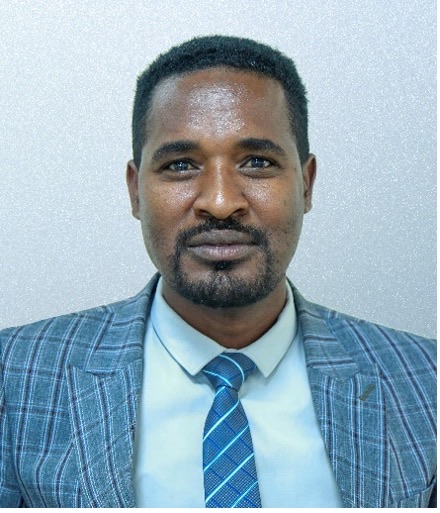
“The Ethiopia’s food-system dashboards should evolve from reporting and monitoring platforms into integrated decision-intelligence systems that directly inform planning, budgeting, policy formulation, investment prioritization, implementation and accountability. This requires institutionalizing dashboard outputs within national, regional, city and woreda planning and budget cycles; producing concise, policy-oriented evidence—including hotspot analysis, cost-effectiveness and investment options—rather than descriptive indicators alone. It also means strengthening multisectoral governance and routine evidence-review mechanisms; and building government capacity to interpret and apply evidence for informed decision making.”
Dr. Anbissa Muleta, Ethiopian Food Systems Transformation and Nutrition National Cluster 2 Lead at the Ethiopian Agricultural Transformation Institute (ATI).
Also at the event was Ms. Anna Lorente Sebastián, Project Manager on the EcoFoodSystems project. Reflecting on the event and the dashboard’s progress to date he shared:
“The future of smart farming is not only about better technologies. It is also about how we connect people, knowledge and data to address real challenges and partnerships and co-creation are essential in this process. The EcoFoodSystems dashboard aims to help key stakeholders connecting agriculture with urban planning and circular economy approaches, and help transition to healthier more sustainable and affordable diets in city regions.”
Ms. Anna Lorente Sebastián, Project Manager, EcoFoodSystems project.
What’s next for smart farming?
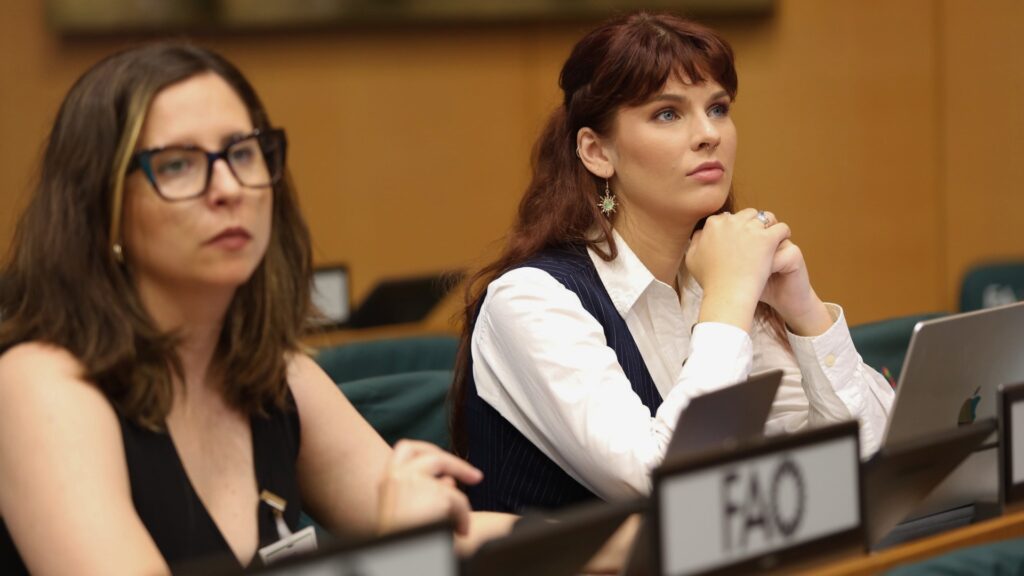
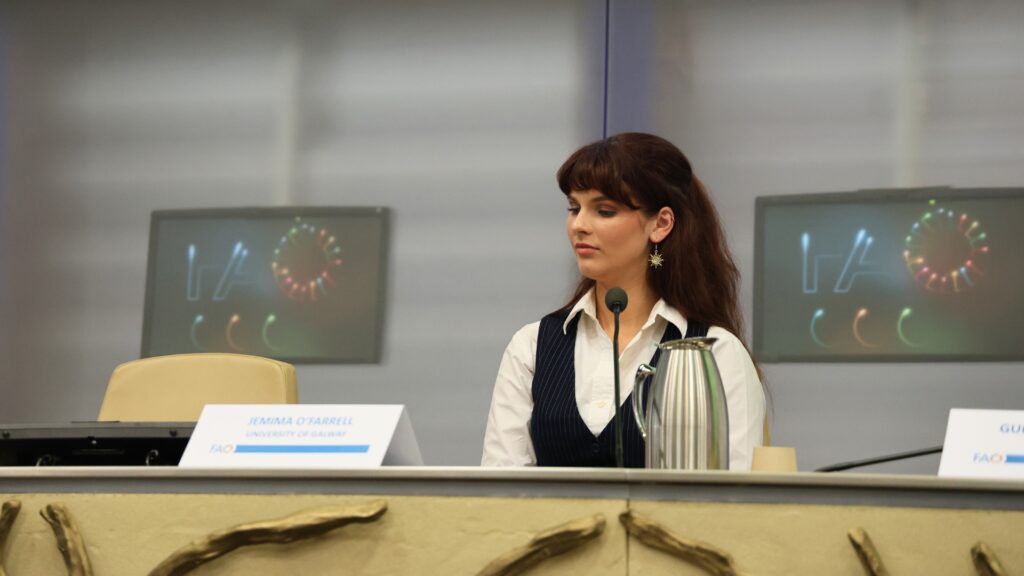

For EcoFoodSystems, the event provided an excellent opportunity to share the current prototype of the EcoFoodSystems City-Regional Food Systems Decision-Support Dashboard with a wider audience. Equally, the project gained from hearing of other solutions, learnings and challenges facing others working on agriculture and food systems.
Thinking forward, for EcoFoodSystems the message remains clear: whether ‘smart’ or not, the best tools are ones that are informed by those working on the ground. This approach will continue to guide our team of researchers as we develop evidence and tools with and for food system actors in Addis Ababa and Hanoi. In the coming months, the team looks forward to meeting with stakeholders in the cities during round three of dashboard testing. The schedule of consultations will take place later this year.
The EcoFoodSystems project extends thanks to IFAD for funding of the project through the European Union DeSIRA initiative.
Watch the side event, Scaling integrated solutions for circular, efficient and resilient urban agrifood systems, on FAO’s website: https://www.fao.org/webcast/detail/fao-global-conference-on-smart-farming–Smart-Farming-for-Urban-Food-Systems-Scaling-integrated-solutions-for-circular-efficient-and-resilient-urban-agrifood-systems/en